One of the questions I hear most often about Santa letters is: what age is the right age?
The short answer is that there isn’t one.
Some children are completely captivated by Santa from a very young age, while others take a little longer to understand the idea. And honestly, I think that’s part of the magic.
For most children, a Santa letter can be enjoyed from around three years old, but there are lovely ways to introduce the tradition to younger children too.
What age is best for a Santa letter?
Around three to eight years old is often a particularly magical age for Santa letters, as children are beginning to understand the story of Santa and can really engage with the excitement of receiving a letter written especially for them.
But I wouldn’t get too caught up in a particular number.
The best time to start is when your child is interested in Santa and enjoys imaginative play.
Santa letters for toddlers
Very young children might not be able to read the letter themselves, but that doesn’t mean they can’t enjoy it.
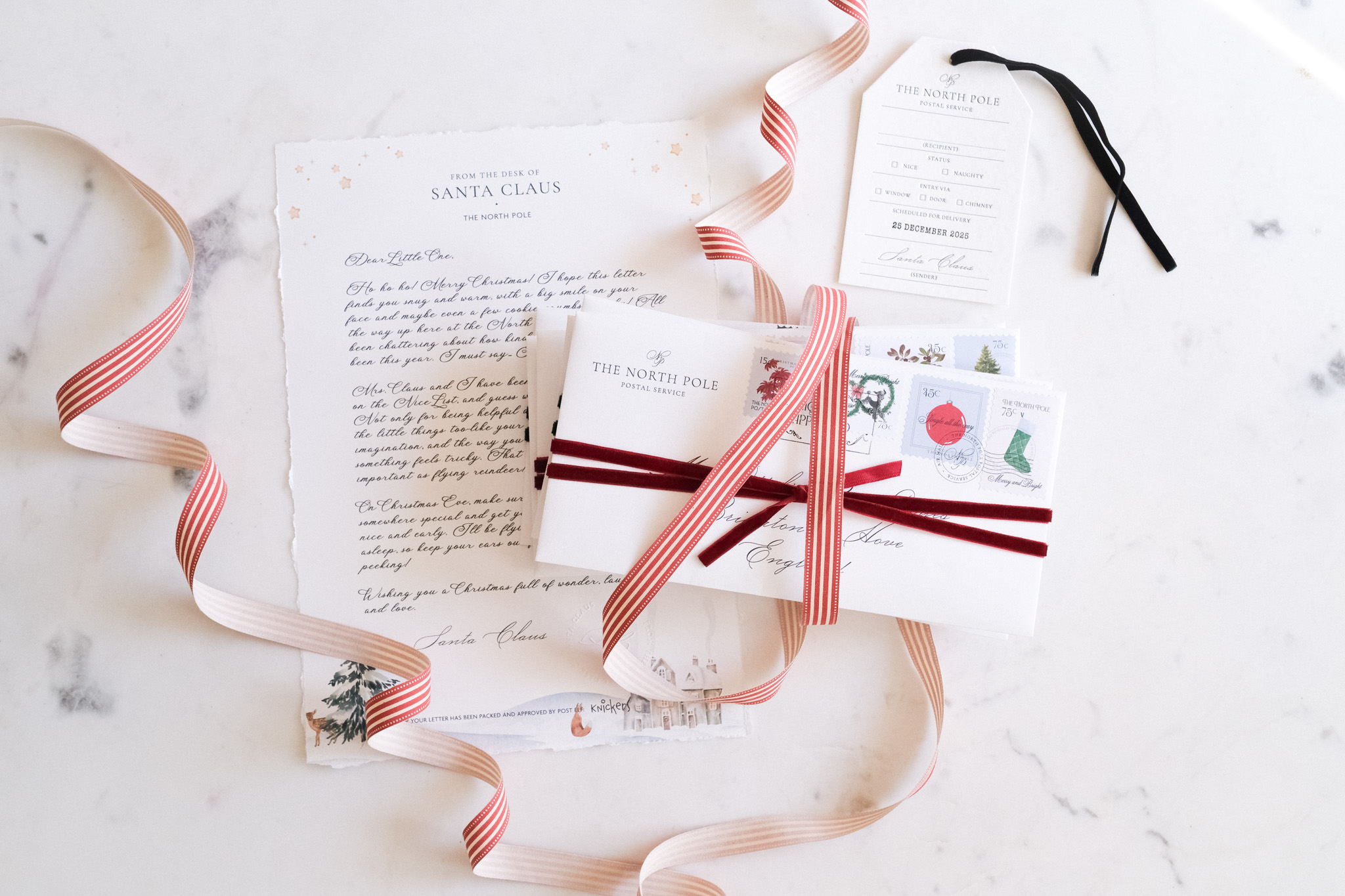
You can read it aloud to them, show them their name on the envelope and let them experience the excitement of receiving something “from Santa”.
At this age, it’s really about the ritual.
They may not remember the words in the letter, but they may remember sitting beside you while you read it.
Santa letters for preschoolers
This is when things can become particularly magical.
Children around three to five are often wonderfully immersed in imaginative play. A letter addressed specifically to them can feel incredibly real.
You can read it together and talk about what Santa might be doing at the North Pole, whether the reindeer are ready and how many sleeps there are until Christmas.
Santa letters for school-aged children
Older children can enjoy a Santa letter in a slightly different way.
Personalisation becomes particularly special because the letter can reflect the little details that make them who they are — their interests, their kindness, the things they’ve been working hard at throughout the year.
At this age, a letter can also become part of a larger family tradition.
Perhaps it arrives on the same date each year and is kept in a special Christmas box afterwards.
What if my child doesn’t believe in Santa yet?
That’s perfectly fine.
Children develop their understanding of Santa at different rates, and there’s no need to rush it.
A Santa letter can simply be another little piece of Christmas magic that you introduce when it feels right for your family.
And remember: Christmas traditions don’t have to be perfect to be meaningful. Sometimes we put so much pressure on ourselves to create a magical childhood that we forget that children are usually delighted by very simple things.
A letter.
A special breakfast.
A Christmas story before bed.
The same ornament coming out of its box every December.
These are the things that become familiar and comforting.
When should you start a Santa letter tradition?
If your child is showing an interest in Santa, Christmas and imaginative play, they’re probably ready. You might start with a very simple letter when they’re little and gradually make the tradition more elaborate as they grow. And that’s one of my favourite things about family traditions: they grow with your children.
The first letter might be something you read to a toddler. A few years later, your child might be eagerly waiting for it to arrive.
And eventually, that collection of letters might become something you tuck away in their memory box.
One day, they’ll be grown up. And you’ll still have that little envelope with their name written on it.
That’s the part I love most.